
Holden HDT Director: Motorsports Icon's Super Sedan Destroyed by a Belief in Crystals
Brutal body kit and esoteric controversy in a car that traded its factory warranty for untested suspension tuning.

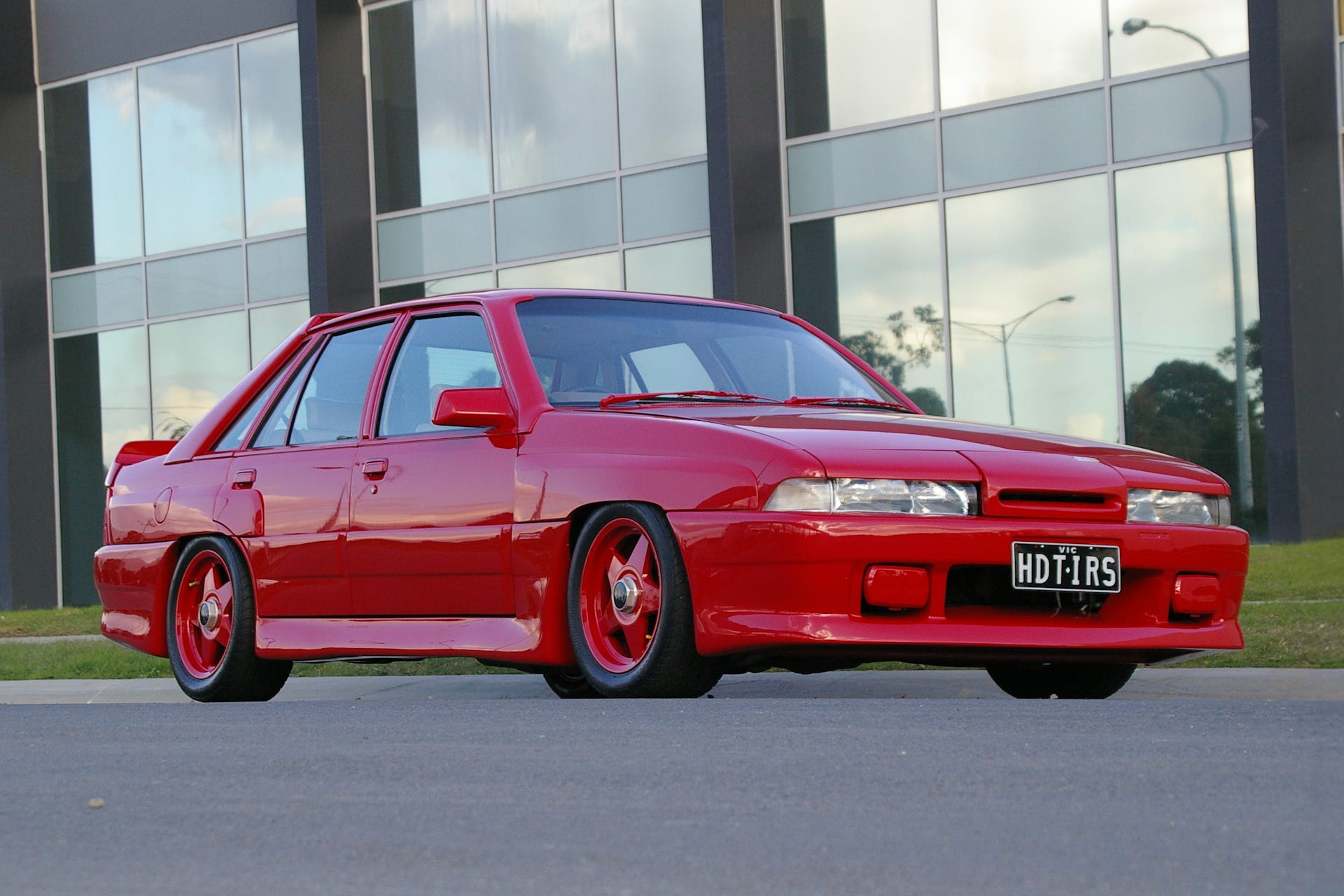
Australian automaker Holden collaborated on production sports versions of its models with racer and Australian fixture Peter Brock until the 1980s. These modifications took place within HDT Special Vehicles, part of the Holden Dealer Team, which was considered Holden’s unofficial tuning arm at the time. However, Brock had greater ambitions and wanted to compete with top European cars in both performance and comfort. A first attempt involved improving the Opel Monza and fitting it with a large V-8.
Relations began to shift when Brock became fascinated by esotericism, which he started applying to vehicle engineering. A newly developed super sedan based on the luxury Calais model was intended to become a unique automobile, partly due to the power of crystals in the so-called Energy Polariser. Added to this was an insufficiently tested rear suspension, which Holden could not tolerate. Brock refused to listen and ceremoniously unveiled the unique HDT Director sedan based on the Holden Calais, complete with all its controversial features, in 1987.
Performance & Driving
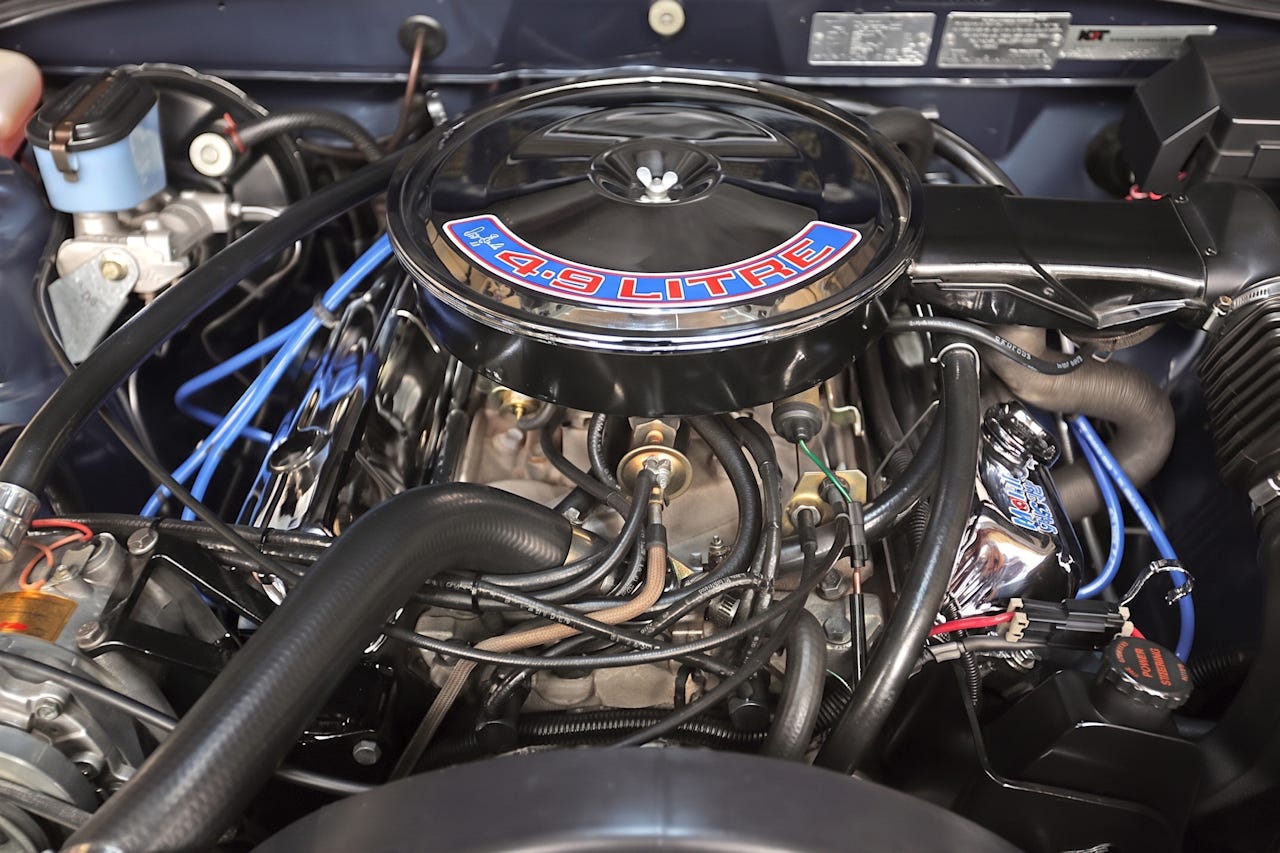
Rear wheels were driven by a traditional large V-8 from General Motors, which could reach a 5.6-liter displacement for the most demanding customers. The base version prioritized massive low-end torque for effortless highway cruising. Particularly in the larger version, it excelled with massive pull and significant acceleration. This was always enhanced by the muffled burble of the V-8, amplified by a custom exhaust system. Manual shifting required a precise hand and clear guidance.
Driving characteristics were significantly influenced by the installation of an improved independent rear suspension inspired by European sports sedans, turning an imprecise highway cruiser into a car with handling approaching that of European competitors. Director models held their line with confidence and lacked no rear-wheel traction when exiting corners. Chassis tuning provided neutral behavior, though the car could become unpredictable upon lifting off the throttle due to low tire pressure.
Chassis modifications had a positive impact on comfort, especially regarding the filtering of road imperfections. Much of the credit for the comfortable ride reportedly went to the Energy Polariser, which dampened unwanted powertrain vibrations and chassis oscillations. A low tire pressure was the real reason for the comfortable ride in large part, which benefited neither handling nor fuel economy. Quality soundproofing cannot be overlooked either, ensuring passengers remained undisturbed.
Exterior & Styling
Originally a sedate large sedan with subtle shapes, the car was transformed by HDT into a brutal road aggressor that forced others out of the way. Much of this was due to an aggressive fiberglass body kit complemented by several other elements that widened the vehicle and brought it closer to the road
Holden Calais (1st gen / VL)


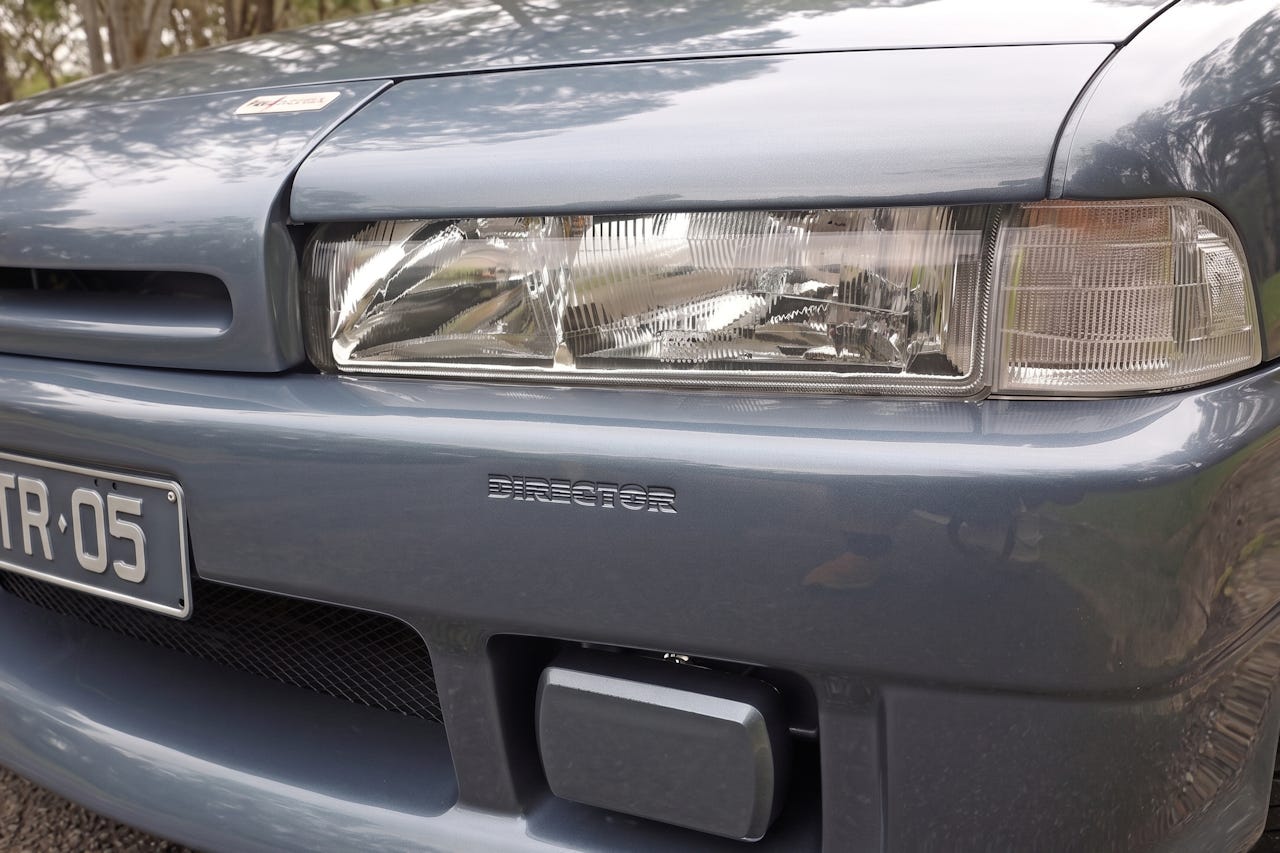
A forward-protruding bumper with cooling vents for the engine and brakes and an integrated spoiler dominated the front end. Even the subtle grille was replaced by a prominent ventilation opening. Partially covered headlights complemented the look, giving the front a frowning, almost sinister impression.
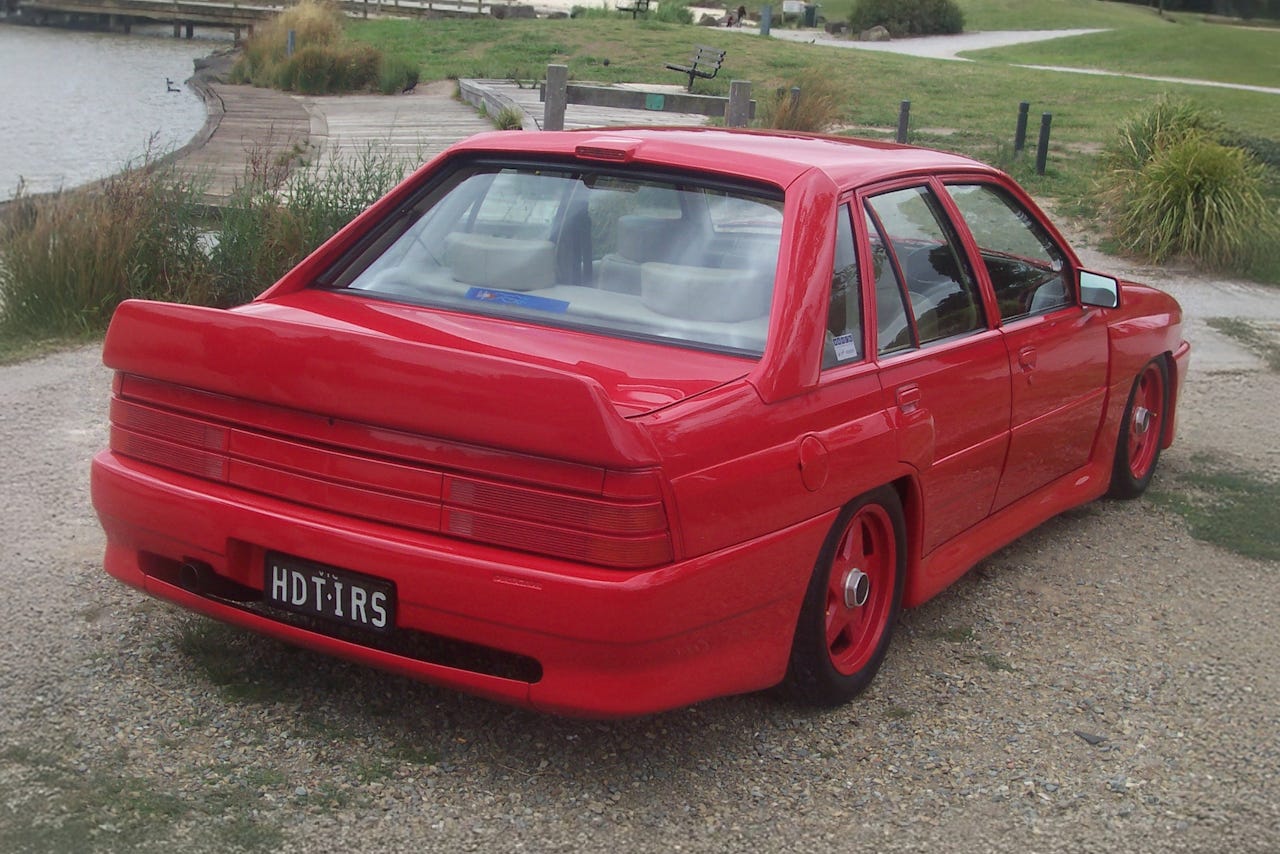
The silhouette corresponded to a classic three-box sedan with rounded edges but featured many tuner-style modifications. Fenders received significant flares that formed a large part of the car’s side, even extending into the rear doors. Side skirt extensions were also present, visually connecting them. Multi-piece wheels typically completed the package, featuring a five-spoke center in body color and the option for additional aerodynamic covers. Their size completely filled the flared wheel wells.
Rear styling was dominated by a massive fiberglass spoiler that partially extended into the sides and rear fascia of the car. It was complemented by a large frame around the rear window that integrated a third brake light in its upper section.
As with the standard version, elegant horizontal lines covered the taillights, but the Director always had them finished in body color, as were the panels around and between them. A rear bumper with a wide vent and usually only a single exhaust tip appeared almost subtle. Not a single Holden logo could be found on the entire car, as HDT branding completely replaced it.
Interior & Equipment
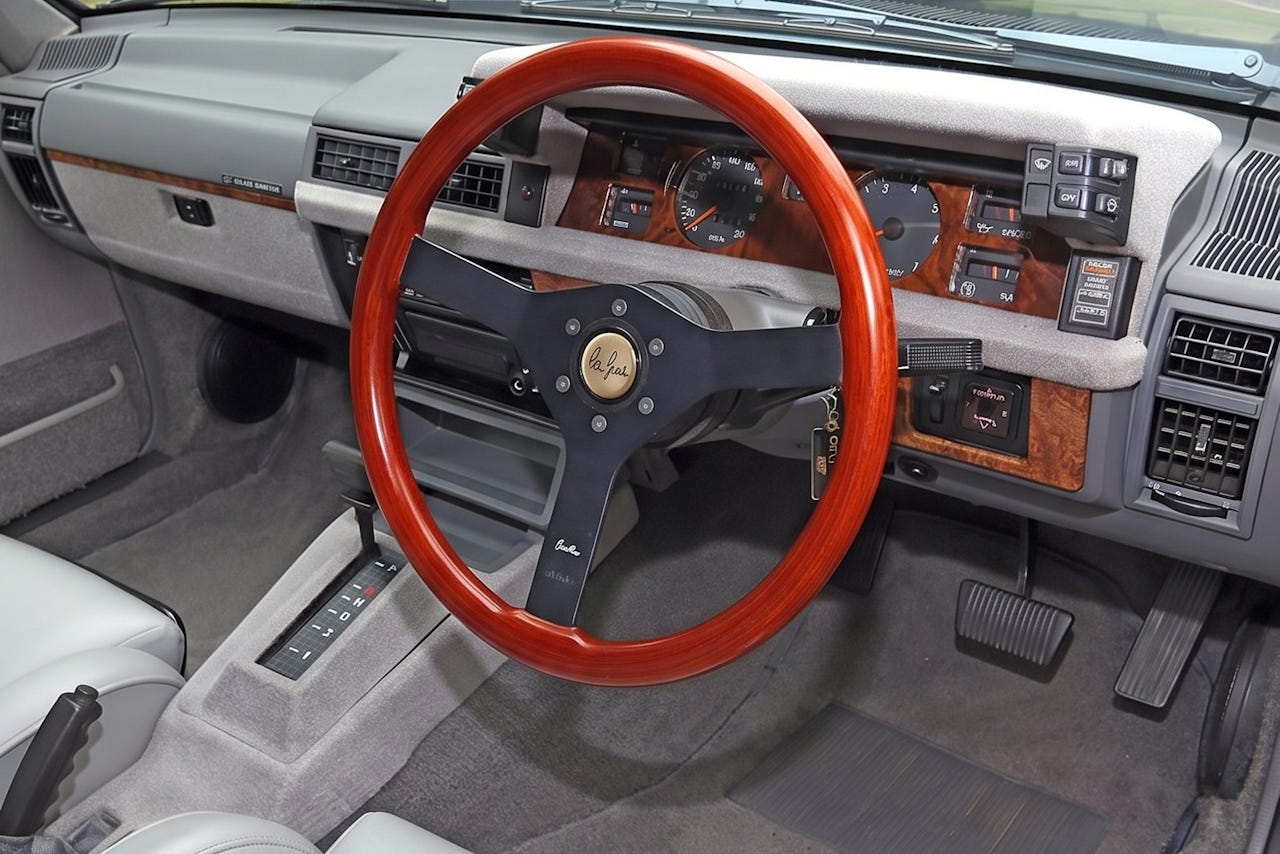
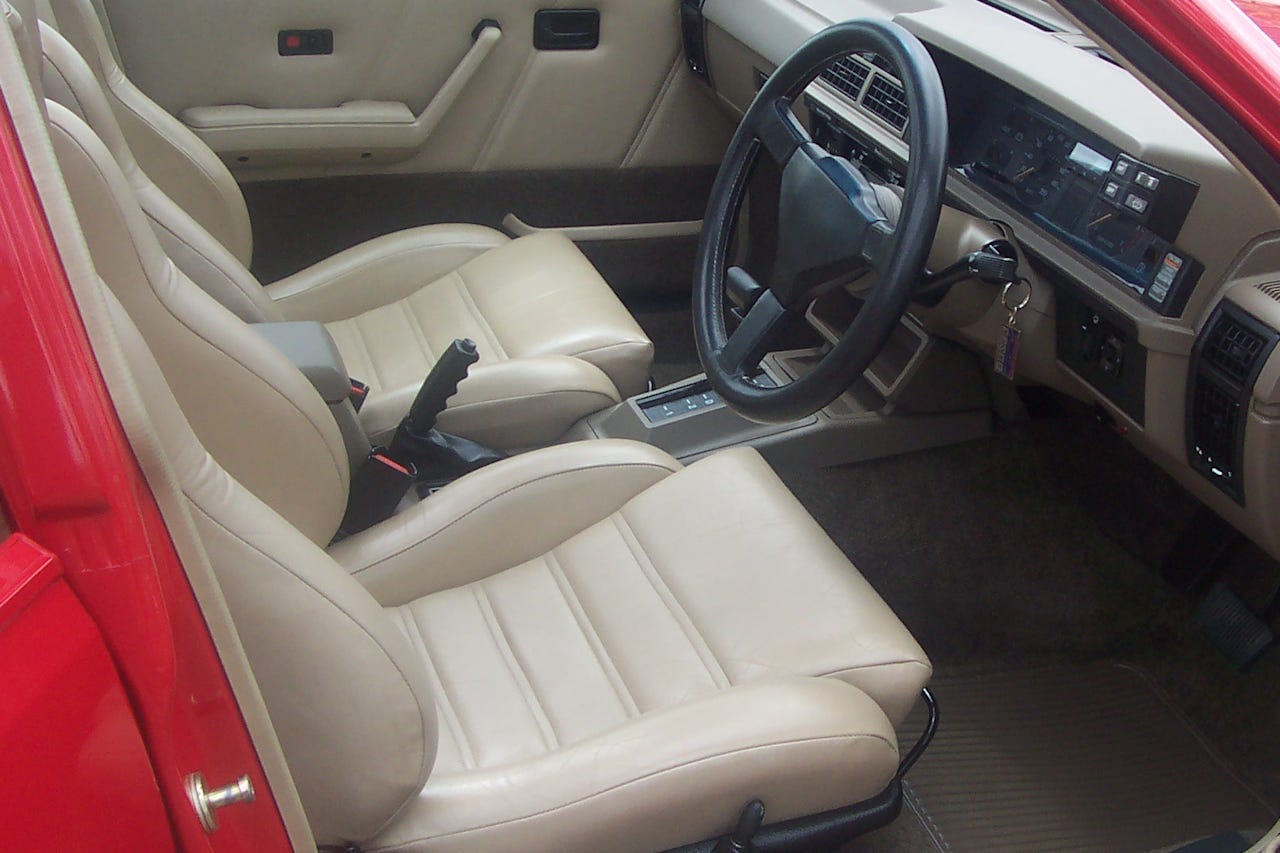
The interior retained its boxy shapes, but great attention was paid to materials as part of Peter Brock’s initiative. Leather upholstery and wood trim were added, and many plastic parts were covered with superior materials. The instrument cluster, often carpet-covered and inlaid with wood, was surrounded by various controls, including the wiper interval switch. A sports steering wheel with a wood rim could replace the original single-spoke steering wheel. Behind it was a panel with round and linear gauges calibrated to significantly higher values.
Leather seats offered truly high-quality lateral support without sacrificing a great deal of comfort. A low center console separated front passengers, housing the tape equalizer for the premium audio system alongside the shifter and handbrake.
The overall dimensions of the entire car were most apparent when looking at the rear seats, where there was truly a lot of room. A comfortable wide bench could be found there, offering a folding center armrest. The trunk also offered enough space for a spare tire, but the spoiler significantly blocked rear visibility. A plaque with Peter Brock’s signature was included.
Energy Polariser
The most controversial feature of this car was the Energy Polariser. It all began in 1984 when Brock sought a chiropractor after a grueling race. In addition to a lifestyle change, the chiropractor initiated him into the so-called orgone theory and the power of crystals. The result of this knowledge was the Energy Polariser, which supposedly aligned the car’s disorganized molecular structure.
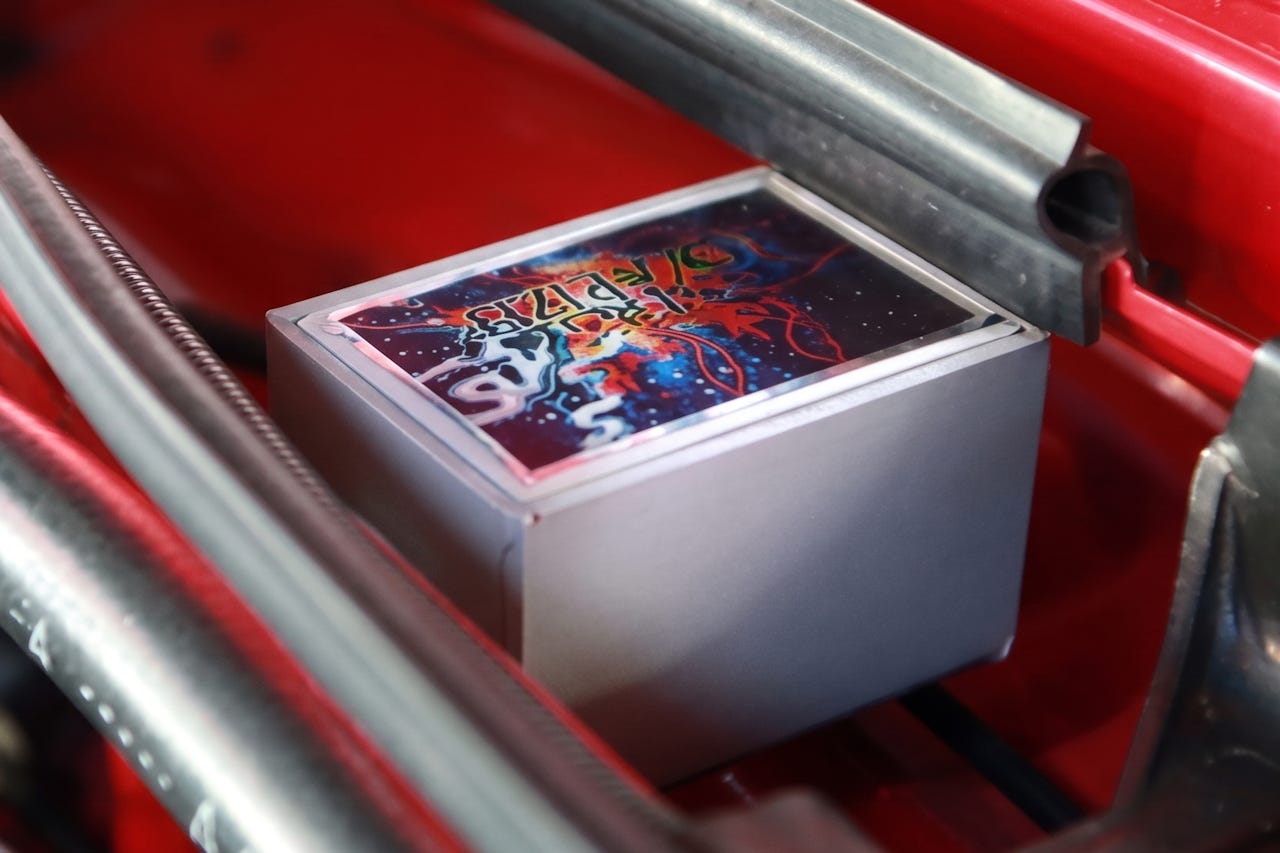
According to Brock, the primary benefits were reduced internal engine friction, limited vibrations and an overall smoothing of the ride. The device itself was a small box containing crystals encased in epoxy. It could be supplemented by wires and aluminum foil, intended to function as an antenna. The Energy Polariser was placed under the hood near the firewall. Unfortunately, science failed to prove any real impact on the car’s qualities.
Market Reception & Verdict
Introducing the car with all its controversial and insufficiently tested features was unfortunately not met with understanding by General Motors. When its requirements were not met, the corporation immediately and publicly distanced itself from the project and Peter Brock himself.
Along with this, all factory warranties and deliveries of bare bodies were canceled. Besides the controversial Energy Polariser, the multi-link rear suspension—which had not undergone sufficient testing—was also a problem. A potential threat of homologation issues and the lack of support and backing from a major automaker deterred the vast majority of potential buyers.
Despite all the controversies, the Director had its positive sides. The body kit and other fiberglass elements gave the car a rugged look, even if the aerodynamic benefit was debatable. The interior was unexpectedly high-quality and stood out with premium materials. Even without the help of the Energy Polariser, the engine provided the car with excellent dynamics, and driving characteristics were truly good thanks to the rear suspension, with the chassis being both firm and comfortable.
The project ended almost immediately due to Holden’s intervention. Deliveries of cars for modification and spare parts were cut off. Fearing the automaker’s reaction, dealerships also refused to cooperate in any way. Estimates of the number of cars produced range between only nine and 13 units before the pre-prepared cars for modification ran out.
Successors & Legacy
This once-controversial car gradually became a holy grail for fans and collectors of rare automobiles. It carries the unique story of Peter Brock, who tried to defy a massive automotive corporation and do things his own way. Due to the split with General Motors, HDT did not introduce a similarly styled model to follow the Director. Brock’s company tried to pivot to other brands but could not prosper without the connection to Holden. The firm continued to decline and is today a standard manufacturer of tuning accessories under new management.
Holden decided to create its own sports division that would meet its standards. In collaboration with the British company Tom Walkinshaw Racing, it introduced Holden Special Vehicles, or HSV. The first model, introduced as early as 1988, was the high-performance Holden Commodore SS Group A, which was the factory counterpart to the Director.
Although not as radical or unique, it underwent extensive testing and was covered by a factory warranty. This began a long line of sports cars that would have continued today if Holden had not been shuttered by GM as part of a 2020 restructuring.
Reconciliation between Holden and Peter Brock did not occur until 1994 when he began racing for the factory team again. This collaboration unfortunately did not lead to the creation of a high-performance car signed by Peter Brock and HDT.
Basic Specifications
Years of production: 1987
Country of origin: Australia
Basis: Holden Calais (1st gen / VL)
Design: Peter Brock / Holden Dealer Team
Engine: Naturally aspirated 4.9–5.6L V-8 (Gasoline)
Layout: Front longitudinal-engine, rear-wheel drive
Transmission: 5-speed manual; 3-speed automatic
Power: 251–310 hp (187–231 kW)
Torque: 306–395 lb-ft (415–536 Nm)
Top speed: ~137 mph (~220 km/h)
Acceleration 0–62 mph (0–100 km/h): 7.2–7.8 s
Combined fuel consumption (claimed): 13.1–16.8 mpg (14.0–18.0 L/100 km)
Dimensions (LxWxH): 187.6 × 67.8 × 53.8 in (4766 × 1722 × 1367 mm)
Wheelbase: 105.0 in (2668 mm)
Curb weight: 3113 lbs (1412 kg)


Would getting rid of the most controversial features have been enough, or were Peter Brock’s ambitions so great that he could not back down?
* Some visuals may contain minor AI-generated edits.
Would you like to see more remarkable, uncommon and performance Australian sedans showcased? I would greatly appreciate your feedback and thank you in advance for pointing out any mistakes or inaccuracies.
Find Autoamazed’s Cars on Facebook.
Sources: HDT Special Vehicles, Holden, Australian Muscle Car Sales, Trade Unique Cars, Muscle Car Stables, WhichCar, Shannons Club, Street Machine Magazine, Australian Muscle Car Magazine, Peter Brock: How Good Is This!