

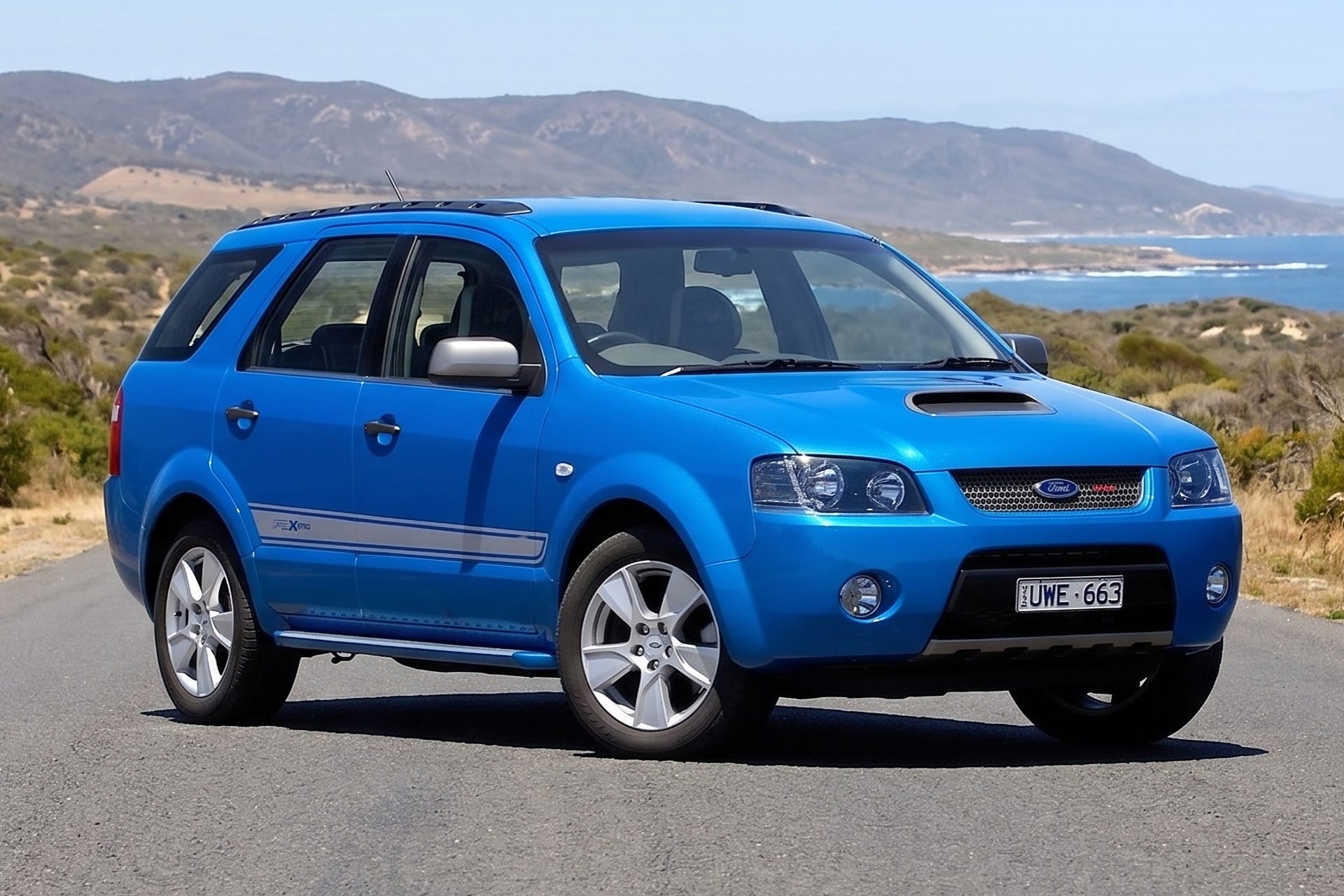
Ford Australia division offered a specific model lineup on the local market for many years, including more practical high-performance vehicles. Behind them stood the sports division Ford Performance Vehicles, which in collaboration with Prodrive modified large sedans and coupe utility pickups. In the new millennium, however, the market for these vehicles gradually began to decline in favor of the SUV category.
Premium brands already offered high-performance versions of their SUVs back then, so FPV decided to create a more affordable yet sufficiently powerful alternative based on the popular Ford Territory to diversify its sports model lineup. A low budget and a killer deadline were overcome by drawing heavily from Ford’s existing parts bin. The result was the FPV F6X 270 sports SUV introduced in 2008, which offered a unique combination of performance and everyday usability.
Performance & Driving
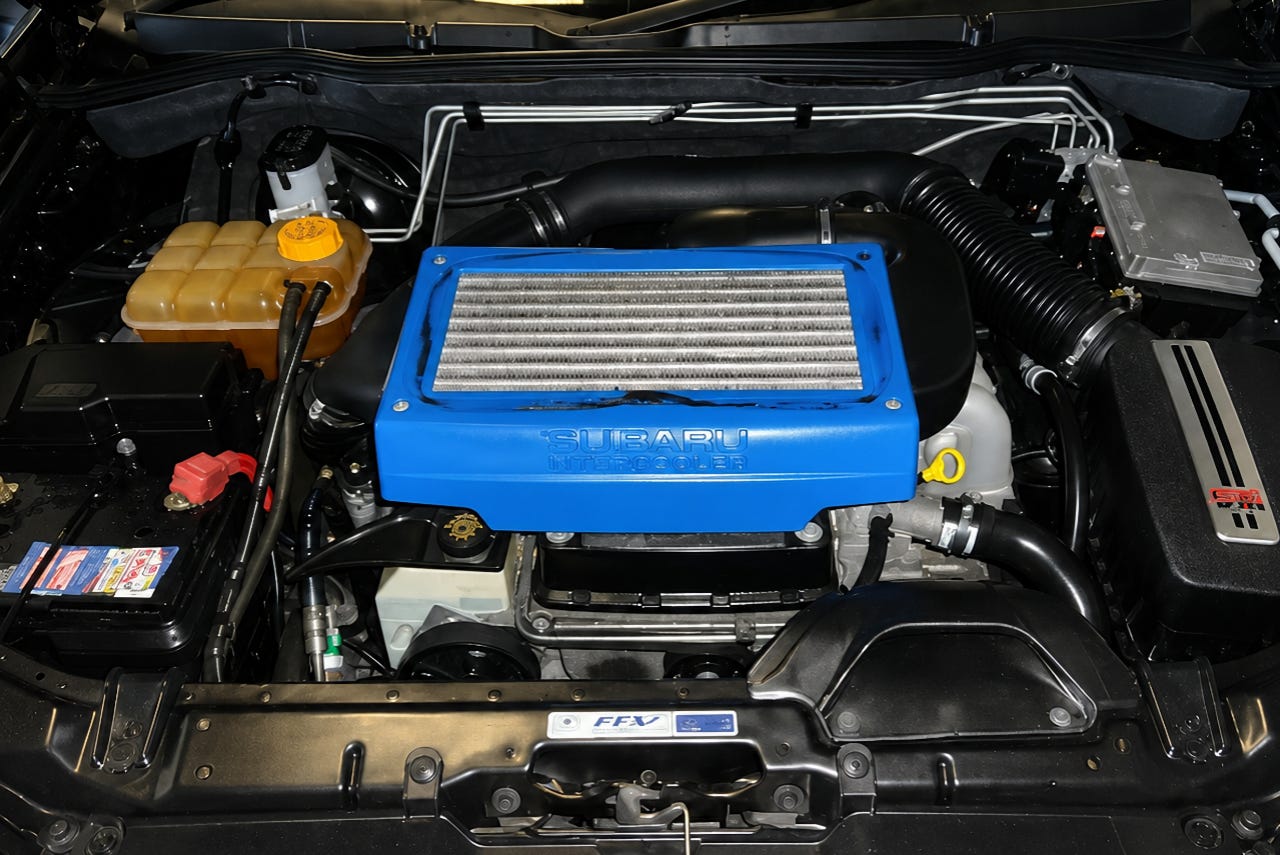
Power came from Ford Australia’s turbocharged Barra inline-six. The engine stood out for its sharp throttle response and strong, linear power delivery from low rpm, with turbo lag quickly overcome by a massive wave of torque. Despite the high weight, all-wheel drive allowed for respectable acceleration comparable to much sportier vehicles.
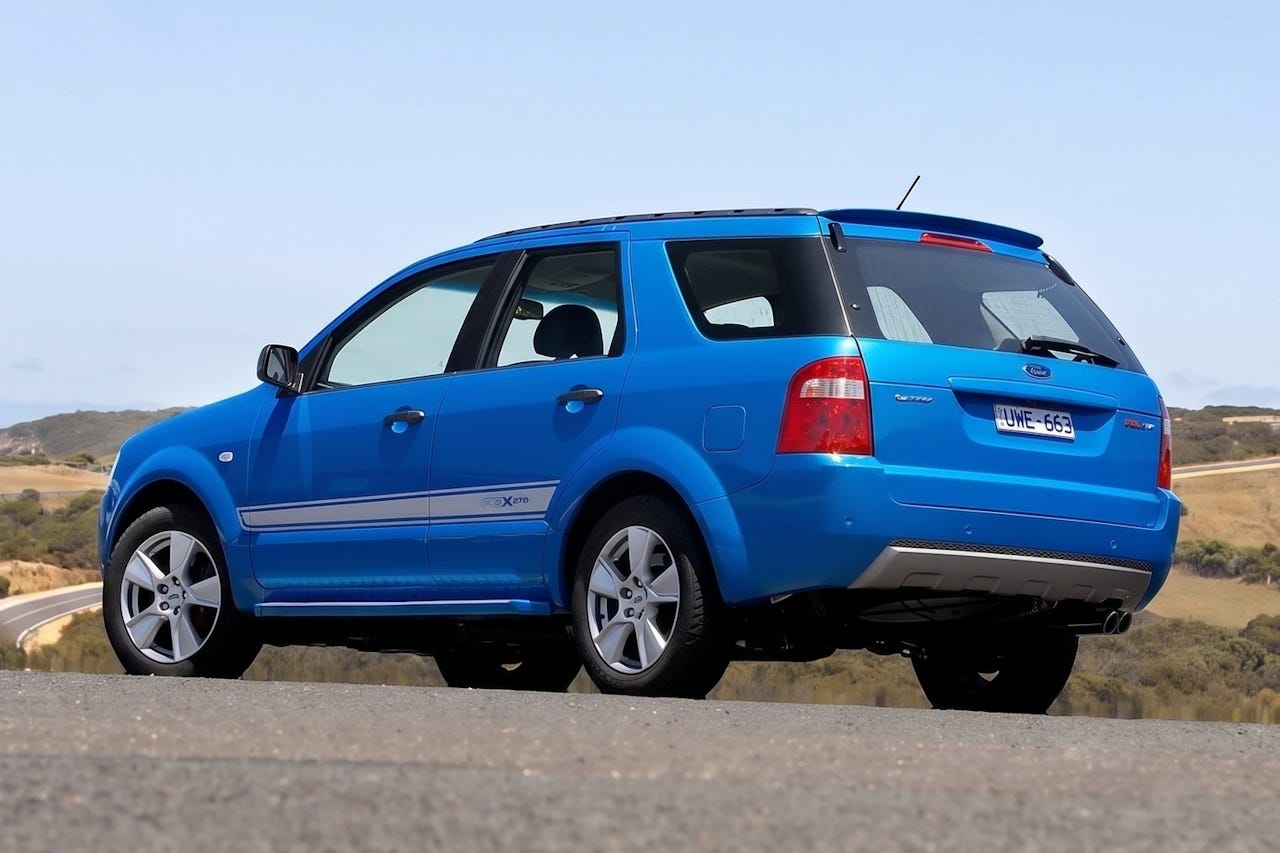
The transmission was calibrated for spirited driving, utilizing an exclusively automatic unit that offered a manual shifting option. Albeit an SUV, even the base variant of this model had no ambitions of heading off-road. Aside from all-wheel drive, it lacked any off-road features, and the F6X modifications further restricted breakover and approach angles.
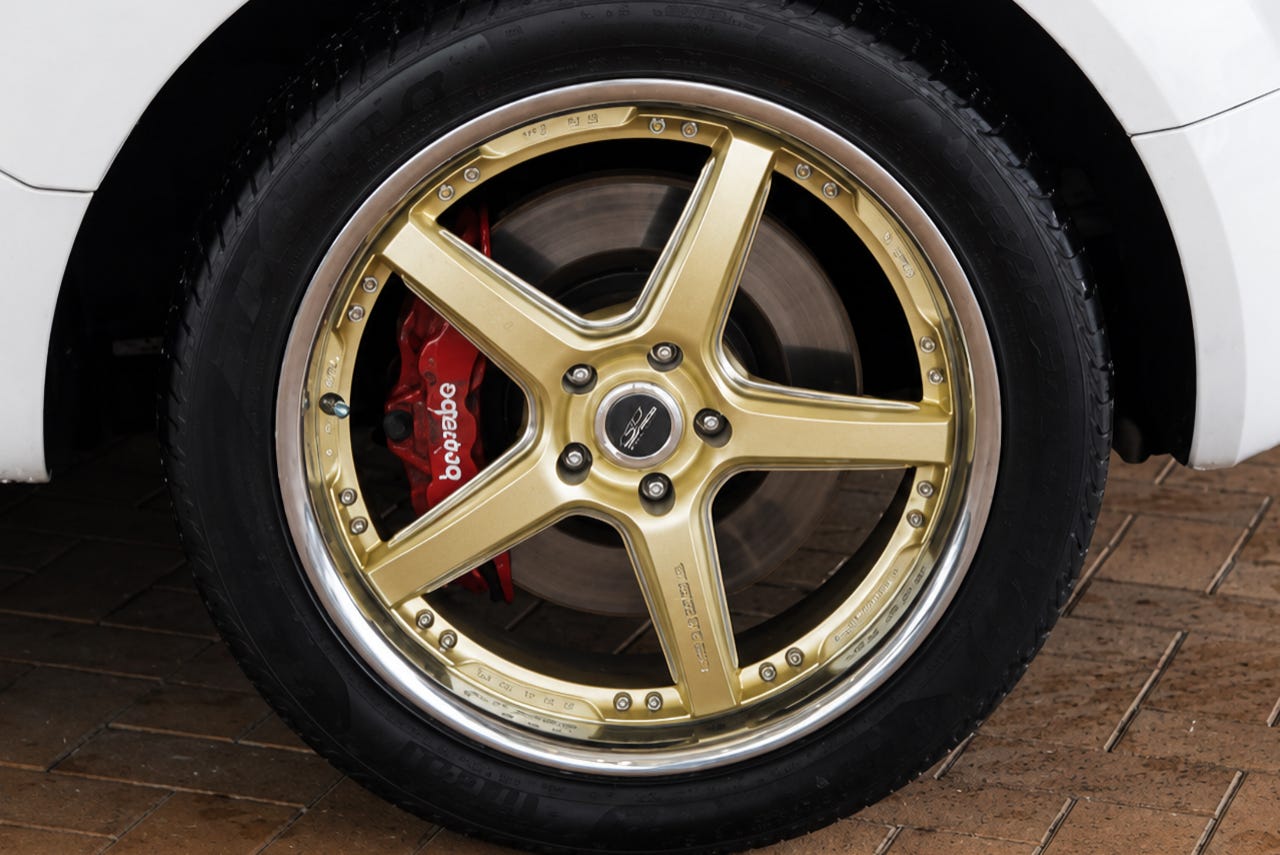
The chassis received numerous modifications in the interest of spirited driving, but the vehicle’s more than 2-ton weight could not be hidden. An electronically controlled all-wheel-drive system with a rear-bias setup aided traction when exiting corners and slightly limited understeer. The steering offered a surprising amount of feedback, while the stability control permitted a minor amount of wheelspin. Stiffening the suspension successfully limited body roll in corners. Large Brembo brakes delivered strong stopping power, yet they still began to fade early during harder driving.
Compromised comfort was the penalty for the sporty suspension tune, significantly shifting the F6X away from the rather floaty Territory model. On degraded surfaces, the vehicle behaved nervously, with road imperfections transmitted directly into the cabin. Despite good sound insulation, engine noise penetrated the interior, which is desirable for a sport-tuned model.
Ford Territory (1st gen / SY)


Exterior & Styling
At first glance, it was an ordinary-looking family SUV that revealed its true intentions only on closer inspection. Thanks to simple boxy shapes with rounded edges, the vehicle could blend into traffic when finished in a less prominent color.
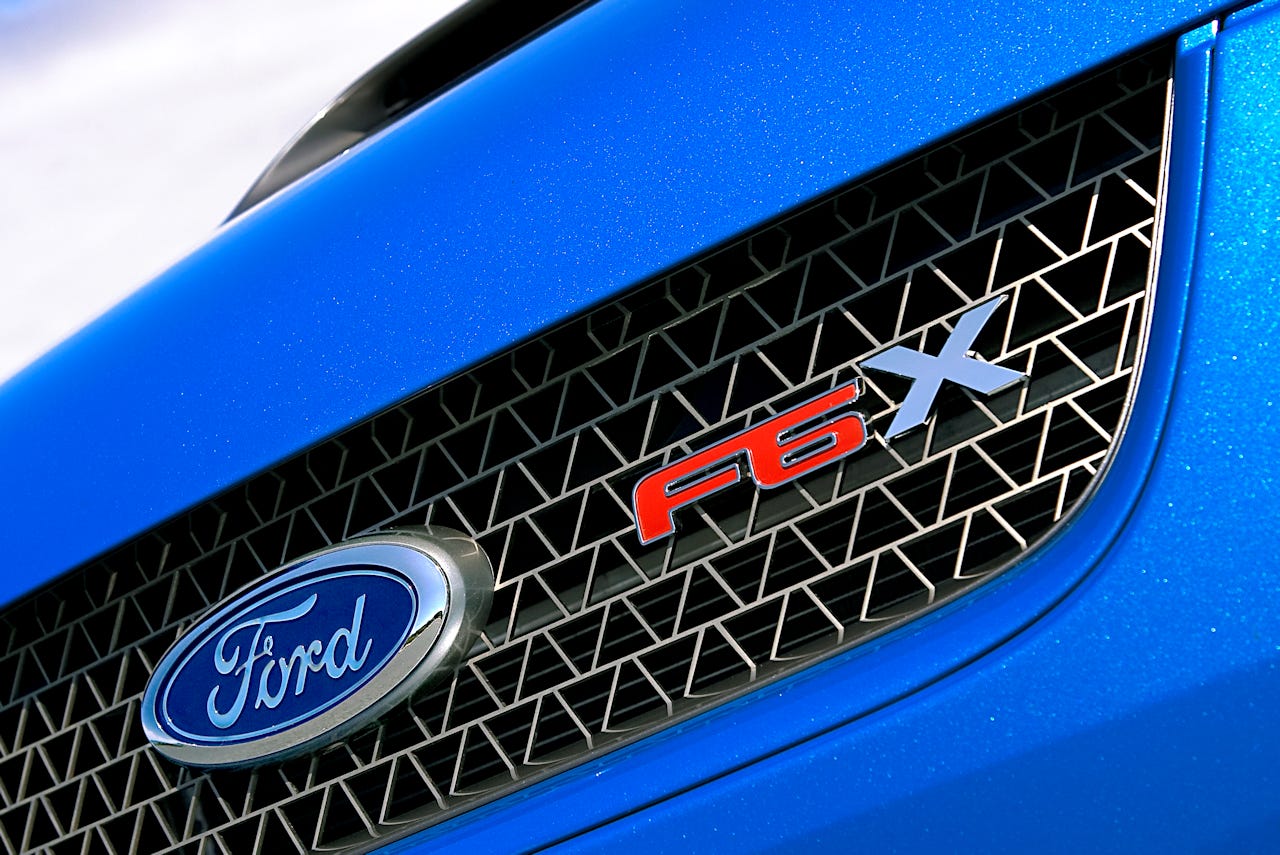
Minimalist dual-parabola headlights remained stock, while the grille received a bolder trapezoidal pattern in gray, typical of Ford Performance Vehicles. The Ford badge on the front end complemented the high-performance model’s designation. A center intake in the bumper was modified to feed more air to the radiator, and its center bar was blackened for effect. This was supplemented by round fog lights and a plastic piece mimicking a skid plate. A functional hood scoop completed the look.
From the side, it was a relatively conventional SUV set apart by sportier elements. New side skirt extensions flowed into the flared fenders that were a standard part of the Territory model. Specific larger-diameter alloy wheels, behind which painted brake calipers were visible, were complemented by a contrasting stripe with the model name on the lower section of the doors. Longitudinal roof rails were integrated into the roof in the interest of better aerodynamics.
Simple taillights on the sides complemented a vertically oriented liftgate topped by a subtle spoiler. A separately opening rear window also aided practicality. The lower edge of the bumper consisted of a combination of a subtle diffuser and a faux skid plate, from which twin exhaust tips emerged.
Interior & Equipment
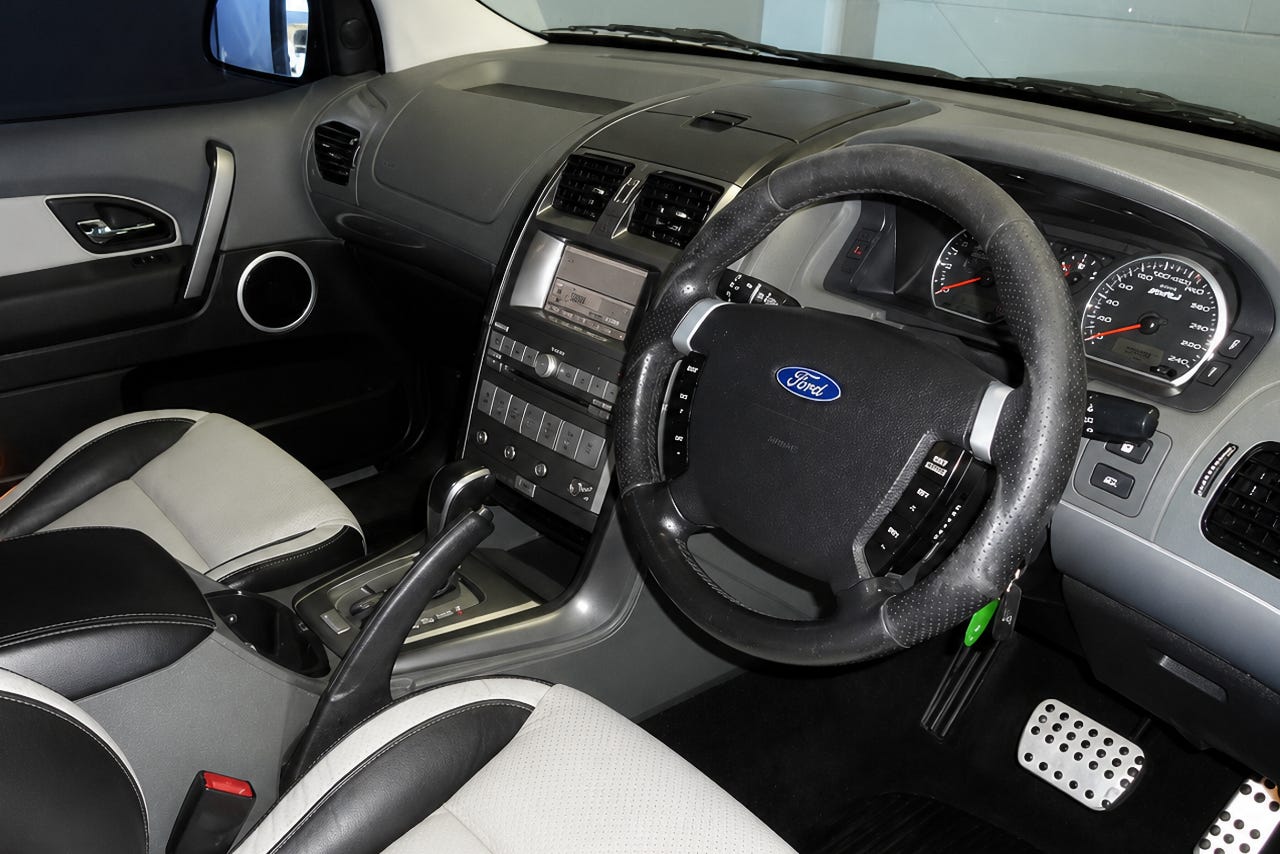
Interior layout stemmed from a mainstream family car where function took priority over style. Even though the F6X model received higher-quality materials in certain areas, hard plastics and simple shapes predominated inside. Door sill plates with the engraved model designation and a serial build number confirmed the vehicle’s exclusivity.
Minimalist in design, the dashboard was dominated by a center stack full of cheaper buttons, rotary dials and a recessed infotainment screen. Behind a leather steering wheel that felt good in the hands sat a modified instrument cluster with white-backlit gauges calibrated to a higher top speed. The engine fired up via a characteristic FPV starter button.
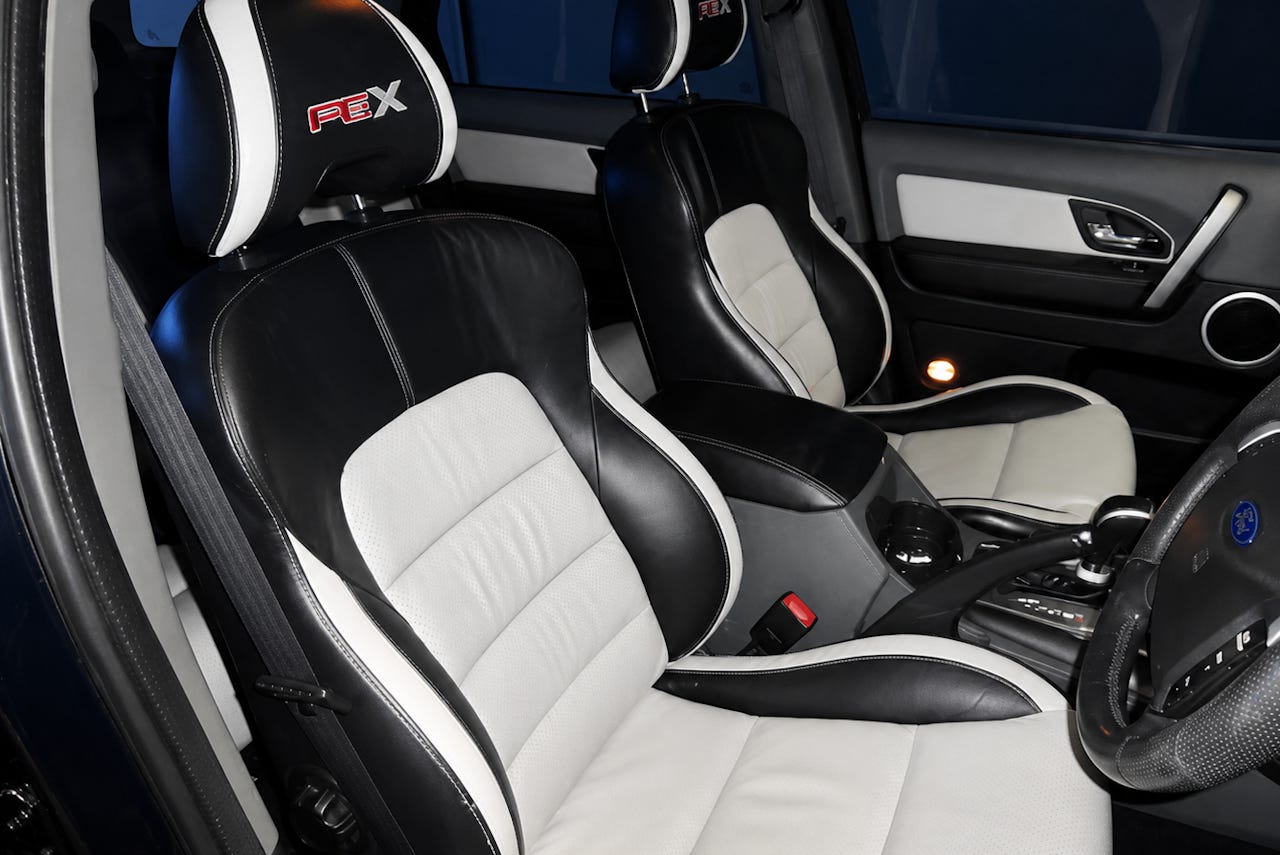
The greatest difference compared to the standard model lay in the front seats, which were borrowed from other FPV-tuned models. They were upholstered in a combination of white and black leather, offering excellent lateral support. Distinctive embroidered F6X badging could be found on the headrests. Between them sat a traditional center console with the handbrake lever positioned in immediate proximity to the driver.
In the rear seats, space was typical of a conventional midsize SUV, yet the quality of materials matched the front positions. Given the layout, a bench seat without prominent lateral support sat here, though it was upholstered in the same leather combination and featured the same badging on the headrests. The option for a third-row seat with matching upholstery materials also existed, which was certainly not common among high-performance SUVs. Cargo space remained generous despite the performance focus.
Market Reception & Verdict
From the start, the F6X model faced very limited demand because it was launched just as the 2008 financial crisis struck. Customers thus lost interest in high-performance and expensive vehicles, including SUVs that stood out for higher fuel consumption. In a different era, however, its strengths would have shone through.
It was an accomplished combination of a seven-seat family SUV and the blistering performance of a sports car, which was easy to exploit on the road to rival sports cars in acceleration. Yet it did not need to display its capabilities ostentatiously. Given the tall build of the body, handling characteristics were sufficiently good.
Consequently, the suspension had to be significantly stiffened, meaning the ride on poorer road surfaces was uncomfortable. Its weight inevitably compromised agility and fuel economy, while the oversized brakes faded after a brief period of harder use. Despite the leather upholstery on the seats, the interior corresponded to an affordable family car dominated by plastics, which did not match the high purchase price. In less than two years in production, official sources state that 229 units of this sport-tuned model were built before production was terminated.
Successors & Legacy
The FPV F6X proved that even a relatively accomplished vehicle can end in a major failure when introduced to the market at the wrong time. In times of crisis, customers turn toward more practical cars that do not trade utility for a series of compromises.
But precisely due to the highly limited production run, this vehicle is highly valued on the used market and remains the most powerful Australian-developed SUV ever built. It is also a prime example of a sleeper that hides high performance behind an ordinary exterior, a trait that is no longer in fashion today.
Since then, the Ford Performance Vehicles division focused again exclusively on performance sedans and ute models, which enjoyed popularity on the local market even during times of crisis. Unfortunately, the existence of this division was short-lived because, following financial difficulties in 2012, Ford took full control over the division, only for it to be completely shuttered after two years. The Australian arm of the brand soon terminated its own development and today sells only global models on the local market.
High-performance or at least sporty-looking SUVs have established themselves today and are offered by practically every automaker. In more premium segments, they can deliver respectable sports performance and good handling characteristics, but they add a striking appearance that commands the attention of those around them.
Among mainstream vehicles, appearance packages have become the norm, while meaningful mechanical upgrades are often limited—the exact opposite of what the FPV F6X represented.
Basic Specifications
Years of production: 2008–2009
Country of origin: Australia
Basis: Ford Territory (1st gen / SY)
Design: Simon Butterworth / Ford Australia Design Studio
Engine:
Turbocharged 4.0L inline-6 (gasoline)
Layout: Front longitudinal-engine, all-wheel drive
Transmission: 6-speed automatic
Power: 362 hp (270 kW)
Torque: 406 lb-ft (550 Nm)
Top speed: ~143 mph (~230 km/h)
Acceleration 0–62 mph (0–100 km/h): 5.9 s
Combined fuel consumption (claimed): ~16 mpg (14.9 L/100 km)
Dimensions (LxWxH): 191.2 × 74.7 × 67.5 in (4856 × 1898 × 1714 mm)
Wheelbase: 111.9 in (2842 mm)
Ground clearance: ~6.9 in (~175 mm)
Curb weight: 4740 lb (2150 kg)


Did the F6X model arrive on the market merely at the wrong time, or did it sacrifice too much everyday usability for performance and a sporty ride?
* Some visuals may contain minor AI-generated edits.
Would you like to see more remarkable, uncommon and performance Australian SUVs ? I would greatly appreciate your feedback and thank you in advance for pointing out any mistakes or inaccuracies.
Find Autoamazed’s Cars on Facebook.
Sources: Ford, FPV, FPV Historical Archives, Just Cars, Carsales, FPV Car Club of Australia, WhichCar, Wheels Magazine Australia, Motor Magazine, The History of Ford in Australia by N. Darwin, WheelsAge.org, Wikipedia