
Cadillac Escalade EXT: Monumental Cruiser That Merged Premium SUVs and Utility Workhorses
Luxury status symbol complemented by unique expandable bed with unmistakable road presence.

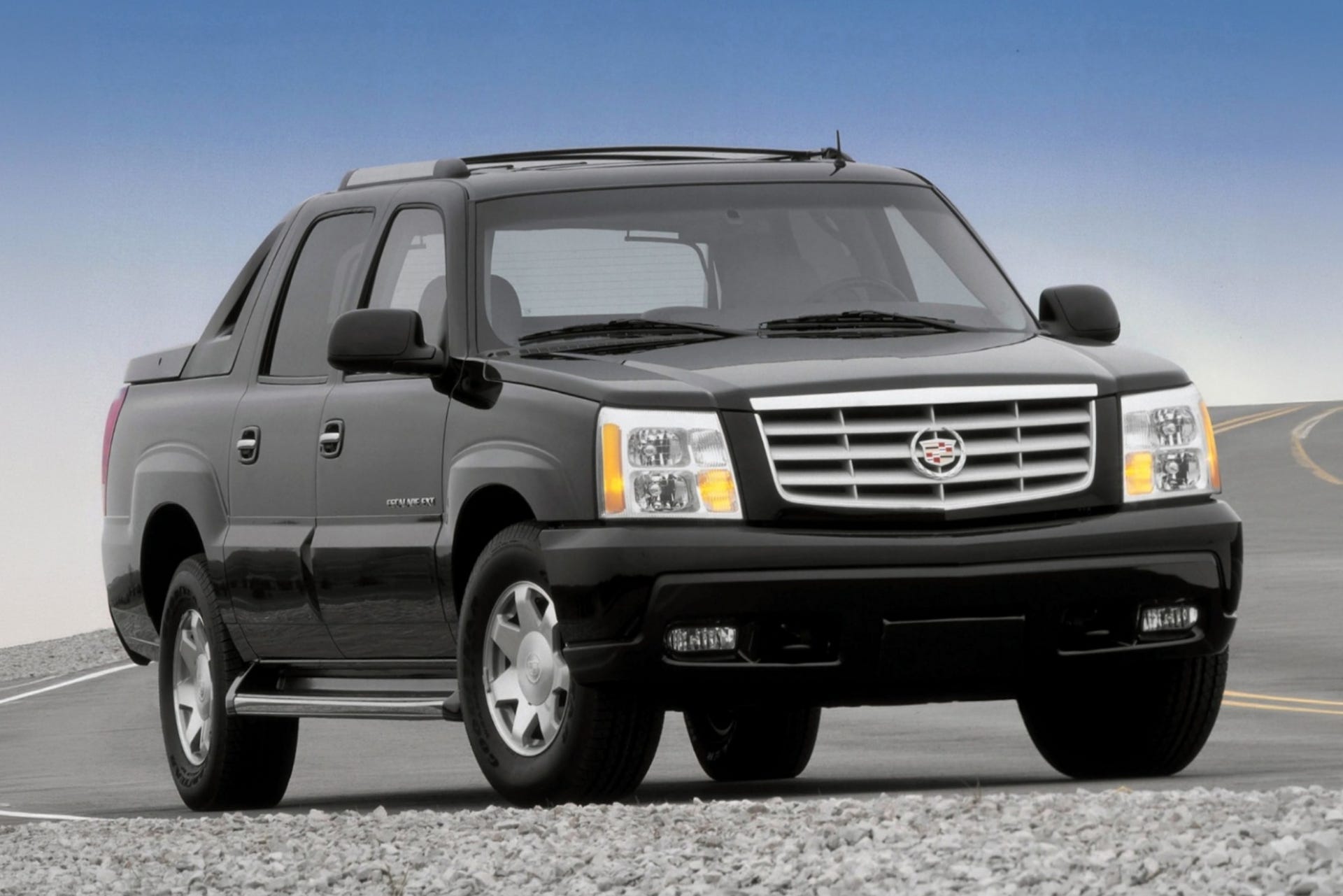
At the turn of the millennium, American automaker Cadillac struggled with a long-term decline in prestige and failed to attract a younger clientele. It caught the rise of large SUVs in the U.S. market late, where the Lincoln Navigator celebrated success, allowing its parent brand to surpass Cadillac in sales for the first time in history. The second-generation Escalade model with a new design ultimately achieved success, but the Ford Motor Company pressed on with a pickup.
Fearing another oversight, Cadillac wanted to react to the rise of luxury pickups and introduce a competitor for the Lincoln Blackwood. A new model on a corporate platform was intended to merge the presence and luxury of a true Cadillac with the utility of a large pickup—a vehicle for the wealthy with an active lifestyle. In 2001, the Cadillac Escalade EXT premium pickup debuted, serving as a significantly more luxurious variant of the Chevrolet Avalanche.
Performance & Driving
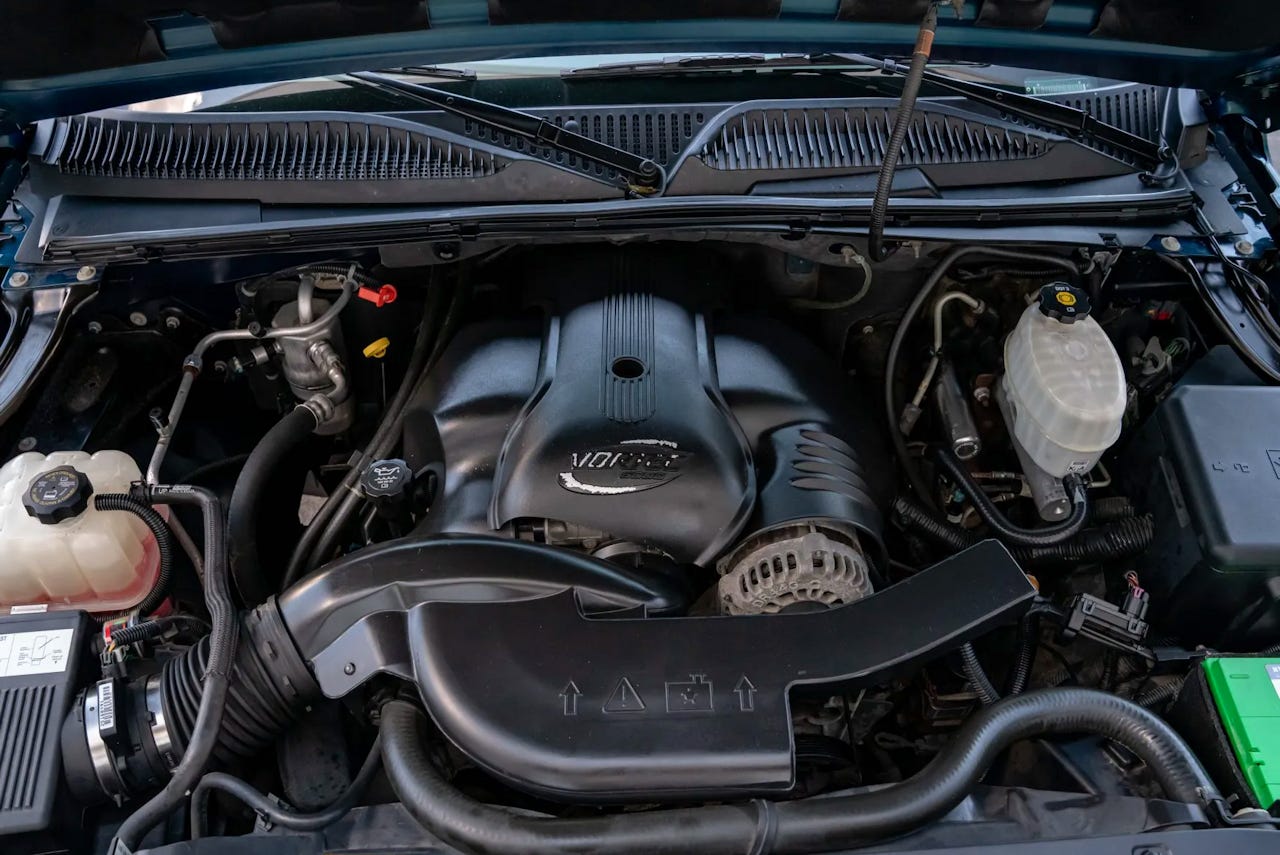
Under the hood, an established large V-8 with the larger of the available displacements worked exclusively, tailored for use in the more luxurious Cadillac. A permanent system that required no driver intervention replaced the part-time four-wheel-drive system found in most Avalanche variants. It brought a more confident ride on the road under reduced traction, but the Escalade EXT was not intended for off-roading. It could not be equipped with a mechanical differential lock, and body modifications limited ground clearance and approach angles.
Engine sizing was geared toward larger commercial vehicles, thus lending the Escalade surprising dynamics. It offered a linear pull from the lowest rpm and delivered respectable acceleration, accompanied by the unmistakable, deep sound of an old-school V-8. A reliable 4-speed transmission with long ratios unfortunately did not excel in quick responses and refinement, thereby betraying a rather utilitarian character. Top speed was not limited by power, but primarily by poor aerodynamics.
Driving behavior was highly clumsy, largely due to a classic body-on-frame construction and high weight. The vehicle rolled significantly in corners, and during faster directional changes, the high-sidewall tires quickly lost grip, leading to prominent understeer. Imprecise recirculating-ball steering was heavily over-assisted and lacked any feedback from the front wheels. Minor directional corrections were necessary, especially on the highway.
Ride experience was dominated by high comfort, evoking the feeling of a classic American land yacht. The Escalade EXT could filter road imperfections excellently, delivering only a minor floating sensation to the occupants. Air suspension on the rear axle maintained a constant ride height regardless of cargo weight. Compared to its cheaper foundation, sound insulation was significantly improved, heavily dampening noise from both the wheels and airflow.
Chevrolet Avalanche (1st gen / GMT800)


Exterior & Styling
A standard American pickup was transformed under the Cadillac brand into a monumental vehicle that demonstrated its dominance on the road. A new approach called Art & Science, which excelled in sharp edges and crisp creases, was applied to the utility foundation.
This also applied to the standard Escalade SUV, which did not differ from the EXT model at the front. Plastic lower body cladding from the Avalanche was finished in body color, attempting to visually lighten the vehicle’s mass. A number of chromed elements and details could not be missing from such a luxury vehicle.
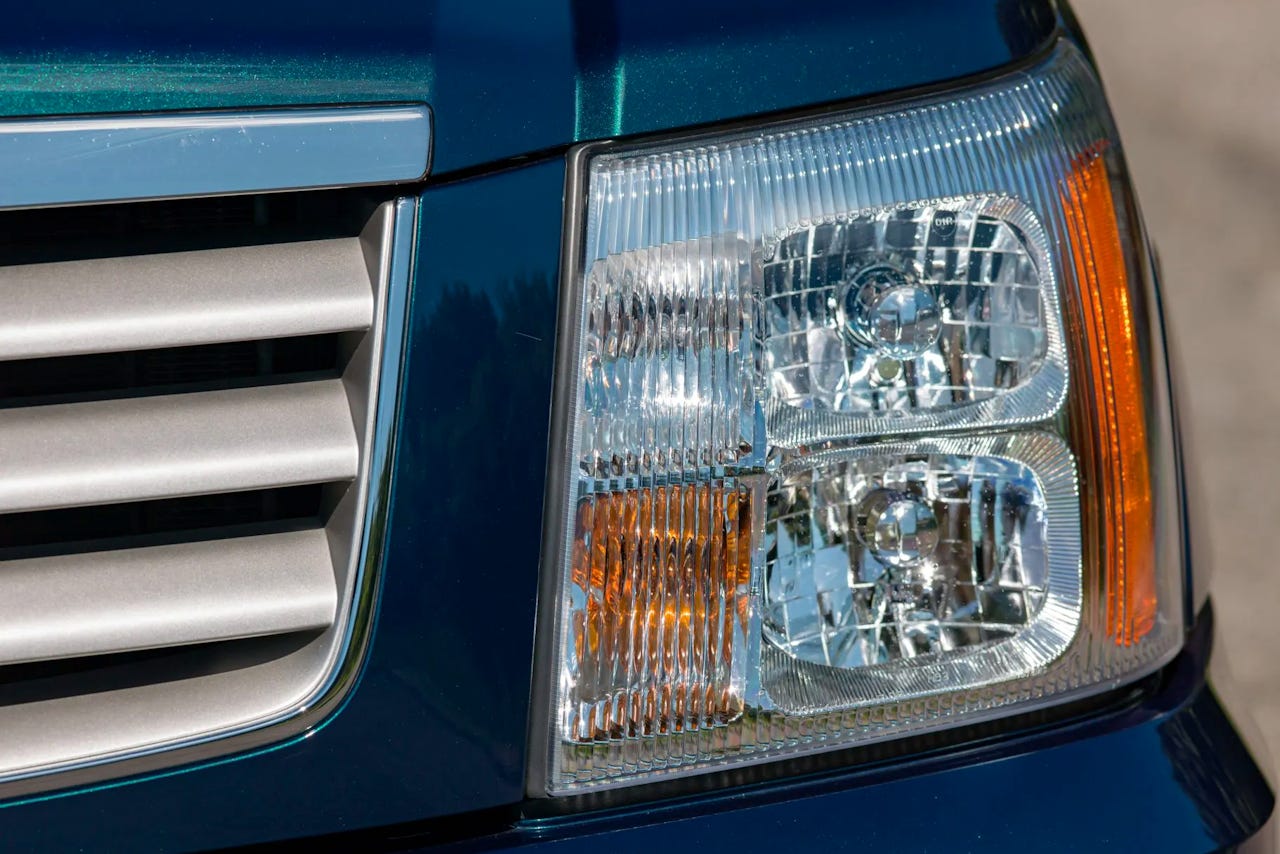
The nearly vertical front end was highly striking and took no account of aerodynamics. A grille with horizontal slats and the Cadillac crest at its center replaced the grille intersected by a silver bar typical of contemporary Chevrolets. Large square headlights with clear optics complemented the front of the vehicle, wrapping into the sides. The bumper complemented the massive front end in its shape and size. Chrome roof rails functioned as luggage racks but also served as a prominent design element.
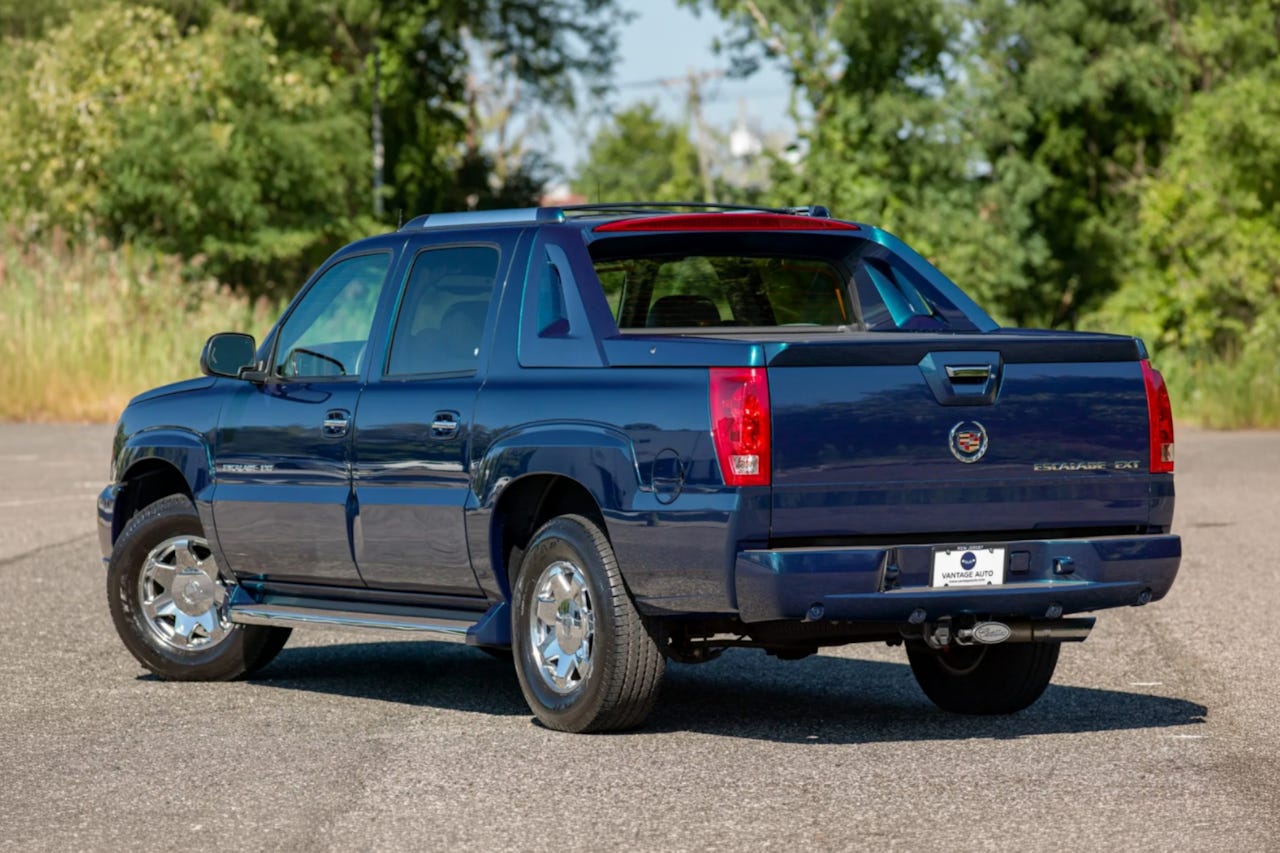
From the side, the massive beltline with small windows stood out most, which even the lower cladding could not conceal. Highly chromed wheels left plenty of room for high-sidewall tires that aided comfort. Prominent chrome running boards simplified entry. Short second-row doors followed by a very long bed area could appear somewhat disproportionate. The C-pillar was complemented by stylized triangular sail panels.
The rear consisted of a relatively large bed, which was not separated from the rest of the body due to its lineage with the SUV. A multi-piece cover protected cargo, pivoting only manually. A partially chromed handle complemented by the Cadillac logo dominated the tailgate. The license plate was located on the rear bumper to keep it on a stationary part of the vehicle. Vertically oriented taillights matched the shape of the Avalanche model but received clear lenses on the Cadillac.
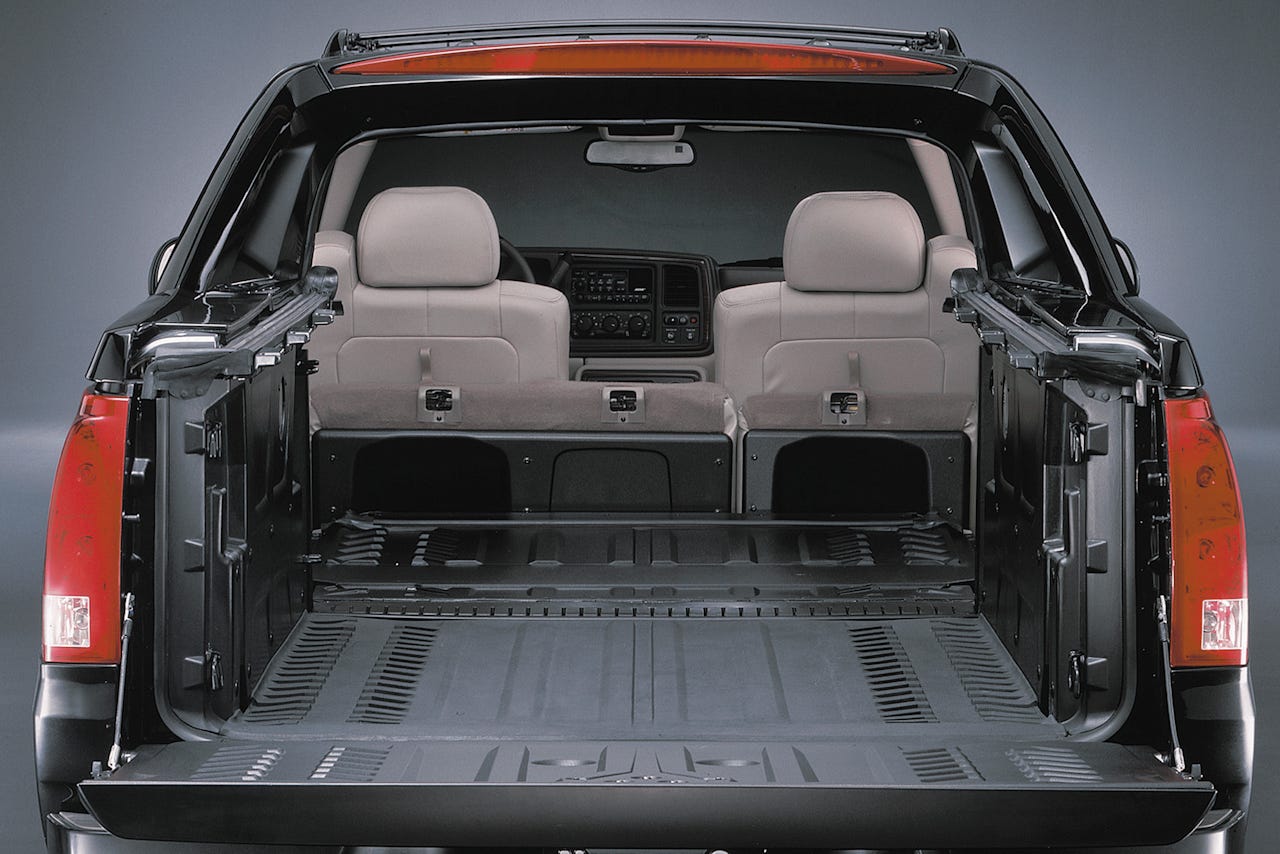
Midgate
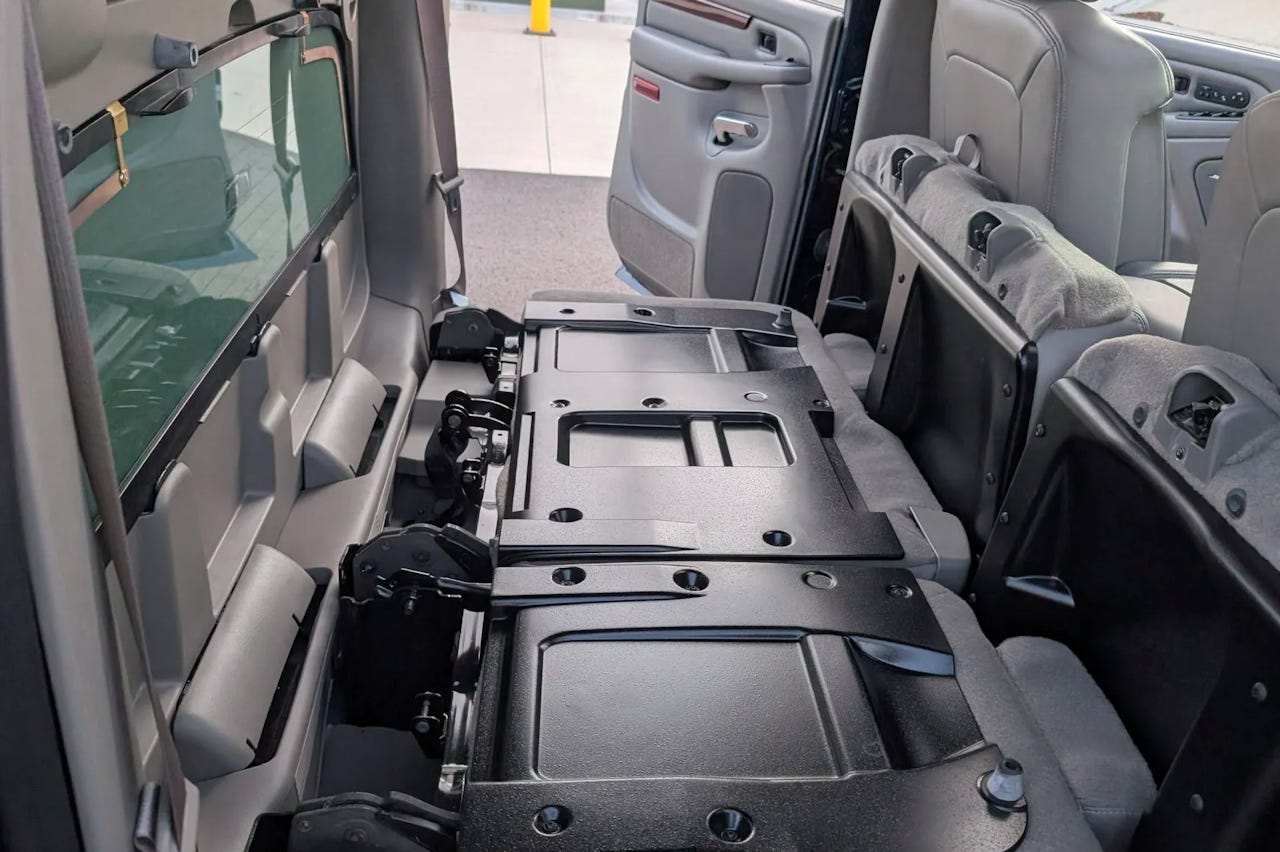
Because the bed was structurally integrated with the cab, the Escalade EXT offered a so-called Midgate, or a folding bulkhead between the cab and the bed. An enclosed five-passenger interior or a very long cargo floor could be utilized depending on needs. The heated rear window could remain in place or be stored within the bulkhead before it was folded, creating an open-air space. Lockable storage boxes integrated into the bed sides above the wheel wells also enhanced practicality.
Interior & Equipment
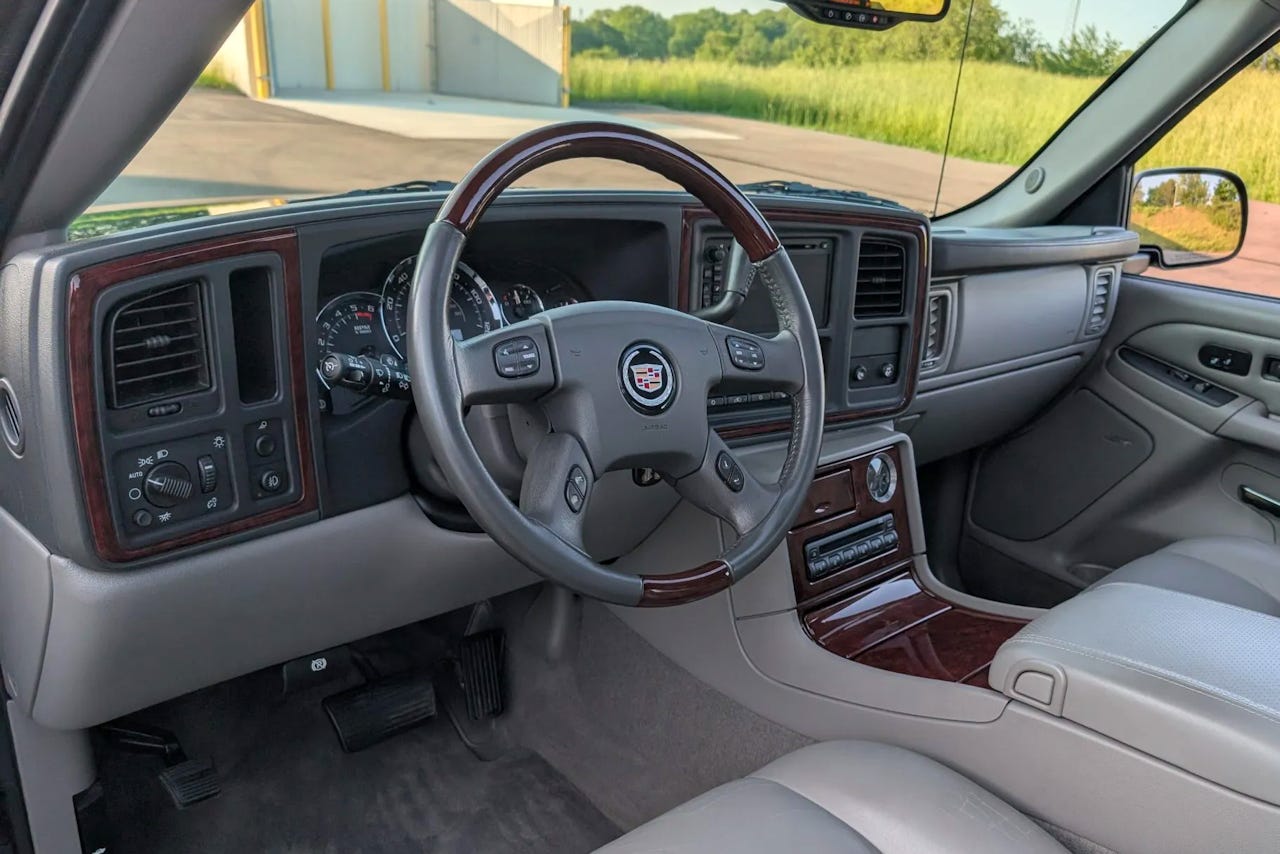
Interior design stemmed directly from the mainstream Chevrolet Avalanche, with Cadillac significantly improving the quality of materials used and adding a number of premium details. Extensive use of wood trim complemented premium leather, but unfortunately, most controls betrayed a cheap origin. In this regard, it practically did not differ from the standard Escalade model, which was based on the Chevrolet Tahoe.
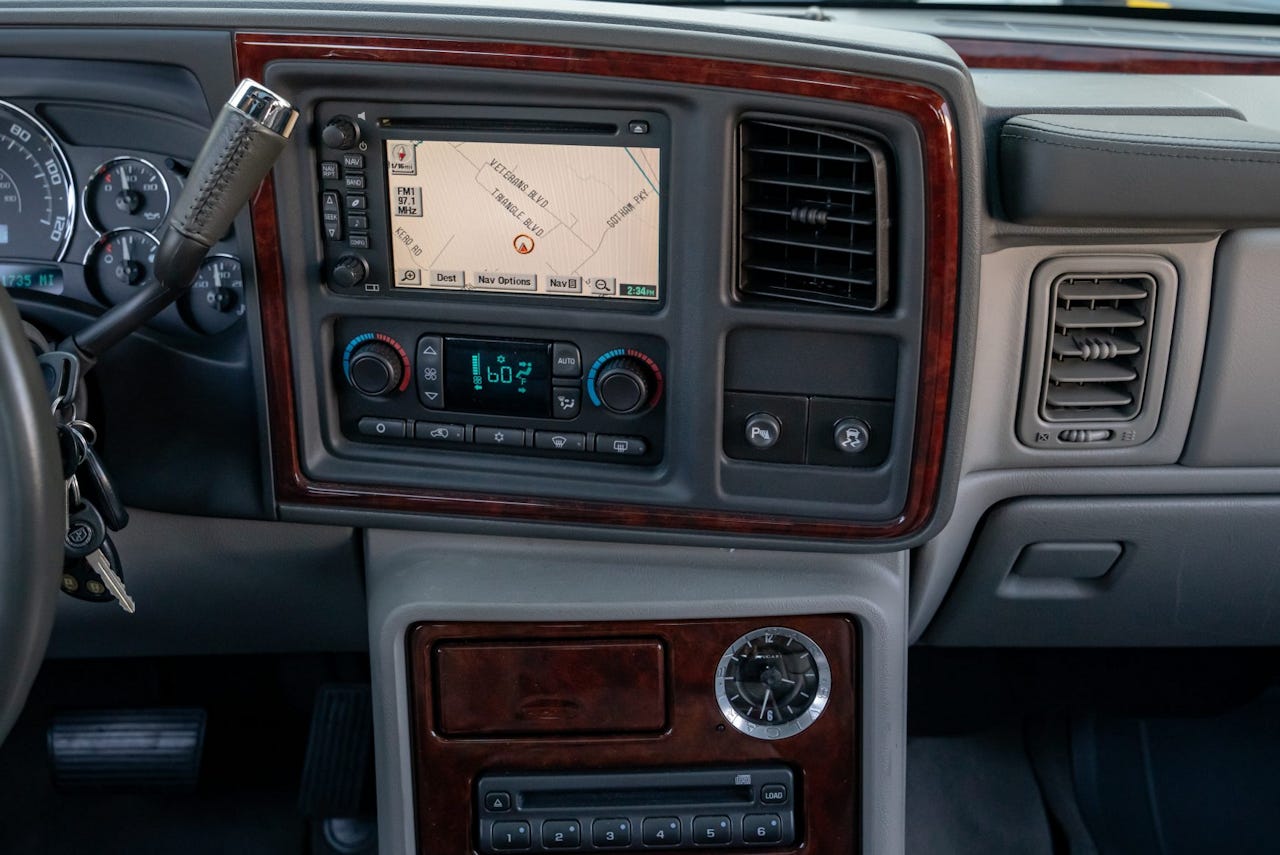
The vertically oriented dashboard with rounded edges was clearly divided into driver and passenger areas. An instrument cluster with a series of round gauges enriched with chrome bezels transitioned into the upper part of the center stack angled toward the driver. Climate controls complemented by an early infotainment screen were located here.
In the lower section, a luxury Bulgari analog clock held center stage. Practical buttons could be found on the steering wheel, which featured a rim combining leather and wood. Turn signal and wiper controls were combined into a single stalk under the steering wheel.
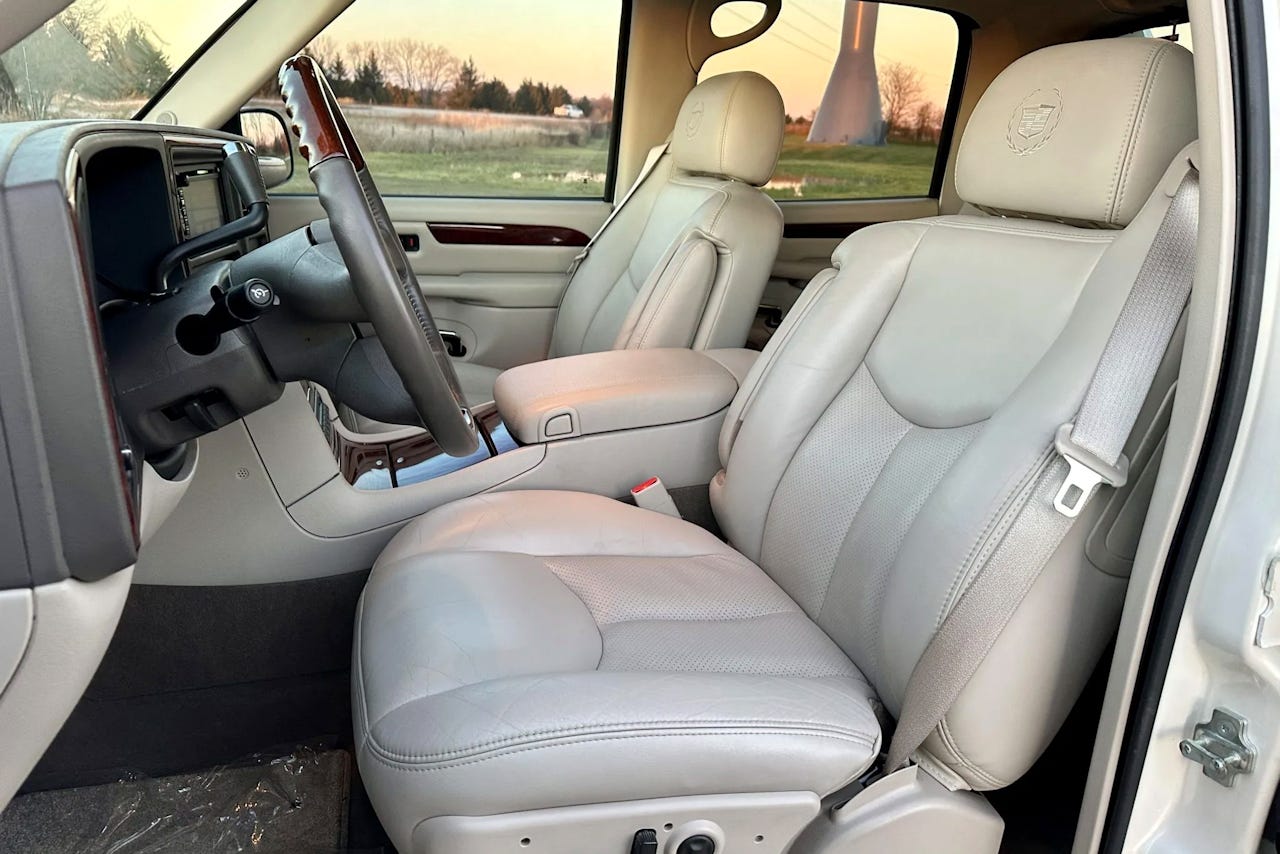
Seats upholstered in high-quality leather with the Cadillac logo on the headrests were designed with maximum comfort in mind. They offered electronic adjustment and included an adjustable armrest on the inboard side. The heating function was split into the backrest and seat cushion. The center console hid storage space and cup holders beneath wood and leather. Climate controls along with vents and cup holders for the second row were located at its rear.
Door panels with a prominent chrome handle offered many controls to adjust a series of functions, including power-adjustable pedals. Even three passengers in the back had plenty of space and comfort. The bulkhead folding function meant no compromise in terms of material or build quality. For rear entertainment, an overhead entertainment unit with a DVD player and its own flip-down screen was available for a surcharge. A tri-zone climate control system and a trip computer were included in the equipment. An electrically operated sunroof was standard.
Market Reception & Verdict
Within a relatively small segment, the Escalade EXT achieved great success, significantly outselling its only competitor with more than 13,000 units sold in the first year. It managed to combine the concept of a true luxury American automobile with the practicality of a pickup.
Its design and sheer size commanded unprecedented respect on the road. Interior comfort was enhanced not only by materials and comfortable seats but also by thorough cabin soundproofing. A powerful engine with a proven design under the hood excelled in reliability, and spare parts were easily available if necessary. It could carry five people or transport a larger load.
A soft and floating chassis was the foundation of a comfortable ride, but it had a very adverse effect on handling. High weight meant clumsiness, and the vehicle rolled significantly in corners and was heavily understeer-prone. A large engine paired with poor aerodynamics resulted in very high fuel consumption.
Despite the addition of many high-quality materials and features, the cabin failed to conceal the utilitarian nature of the underlying foundation. In the eyes of customers, however, the pros outweighed the cons, and by 2006, more than 50,000 units of the first-generation Escalade EXT model alone were built.
Successors & Legacy
The Cadillac Escalade in its EXT version popularized the concept of modern luxury-equipped pickups, which are increasingly common in the United States. Customers are willing to spend very high amounts for the combination of a premium cab on par with luxury sedans, a powerful appearance, and the practicality of a bed.
Riding the wave of hip-hop culture very successfully, the Escalade became a universal symbol of wealth and power that commanded respect in its surroundings. Everyone who was anyone in contemporary pop culture had to be seen in it. Ostentatious modifications began to emerge, where massive wheel sizes played the main role, ideally with spinning spinners in the center.
The entire image of the Cadillac brand and its perception by the general public began to change, thanks in part to this model. Significantly younger buyers suddenly became interested in a brand previously reserved for seniors. The new Art & Science approach, characterized by an emphasis on modern technology and striking design, also played a large role in this transition. Confident sharp edges and creases that caught attention replaced rounded, conservative shapes.
Simultaneously, sports models began to emerge to compete with European brands. In addition to high performance, they soon managed to match them in terms of handling and driving characteristics.
Brand prestige continued to grow, both in terms of luxury and speed and handling in the case of sports variants. Today, it is building its own Formula 1 team while remaining the only brand that still offers a high-performance large sedan with a manual transmission. With a wide portfolio of electric vehicles, it does not forget the future either.
Total sales of the first generation were more than satisfactory; therefore, a second generation was created, which brought improvements in every direction, just like the standard Escalade model. A more powerful, modern V-8 with better fuel economy appeared under the hood, while a system of magnetorheological adaptive dampers, which could limit body roll and improve handling, replaced the mechanical suspension.
Exterior design retained its massive character, but the interior, unlike its cheaper siblings, received its own dashboard that fully corresponded to the premium segment in its execution. A richer equipment list went hand in hand with this. The EXT model did not lose its unique Midgate system either, but soundproofing and thermal insulation were improved.
In conclusion, a comparison presents itself with the main competitor in the form of the Lincoln Blackwood, thanks to which the Escalade EXT itself was created. Lincoln attempted to transform a pickup into a full-fledged sedan and sacrificed most elements that are important to a pickup.
A large bed was transformed into an enclosed trunk where cargo could not fit, whereas the Escalade EXT featured a conventional bed that could be extended further. Blackwood did not offer all-wheel drive either, which made the Escalade a significantly more practical vehicle. Customers rejected this major compromise, and the Blackwood thus lasted in production for slightly more than one year, with fewer than 4,000 units built.
Basic Specifications
Years of production: 2001–2006
Country of origin: United States
Basis: Chevrolet Avalanche (1st gen / GMT800)
Design: Wayne Cherry / Cadillac Design
Engine: Naturally aspirated 6.0L V-8 (Gasoline)
Layout: Front longitudinal-engine, all-wheel drive
Transmission: 4-speed automatic
Power: 345 hp (257 kW)
Torque: 380 lb-ft (515 Nm)
Top speed: 106 mph (170 km/h)
Acceleration 0–62 mph (0–100 km/h): ~8.3–8.9 s
Combined fuel consumption (claimed): ~12 mpg (~19.6 L/100 km)
Dimensions (LxWxH): 221.4 × 79.5 × 75.6 in (5624 × 2019 × 1920 mm)
Wheelbase: 130.0 in (3302 mm)
Ground clearance: ~8.3 in (~210 mm)
Curb weight: 5814–5900 lb (2637–2676 kg)


Could the Cadillac Escalade EXT have received an even warmer reception with a better chassis and interior, or were these merely insignificant details for potential American buyers?
* Some visuals may contain minor AI-generated edits.
Would you like to see more remarkable, uncommon and premium American pickup trucks showcased? I would greatly appreciate your feedback and thank you in advance for pointing out any mistakes or inaccuracies.
Find Autoamazed’s Cars on Facebook.
Sources: Cadillac, Bring a Trailer, GM Heritage, Cadillac Database, Jim Ellis Cadillac, Car and Driver, MotorTrend, CarBuzz, AutoWeek, Standard Catalog of Cadillac 1903-2004, WheelsAge.org, Wikipedia